Wim Delvoye has taken the modern large-format 3d printer and used it to recreate the Gothic world, if the EVERYTHING were Gothic. Nautilus shells, tables, gazebos even a comcrete mixer are all done in complex neo-gothic tracery.
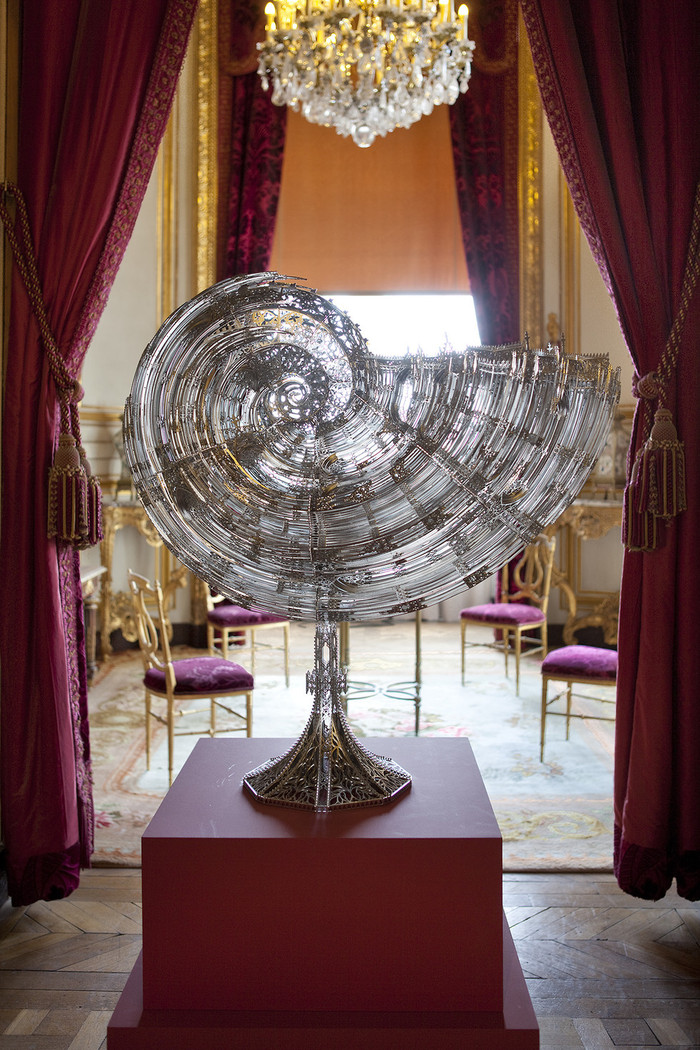
Wim Delvoye has taken the modern large-format 3d printer and used it to recreate the Gothic world, if the EVERYTHING were Gothic. Nautilus shells, tables, gazebos even a comcrete mixer are all done in complex neo-gothic tracery.
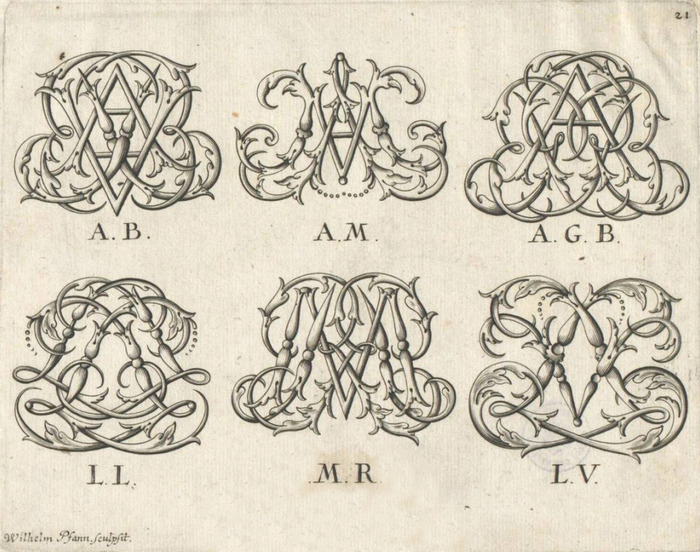
One page, covering the pairs AL through AT, from a book of monograms entitled Schul der Pallas (The School of Pallas), engraved by Johann Baptista Homann. This copy is owned by the Österreichisches Museum für angewandte Kunst (Austrian Museum of Applied Arts), more commonly referred to as the MAK.
A
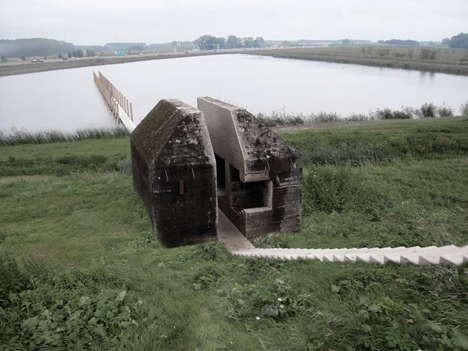
RAAAF and Atelier de Lyon spent 40 days slicing through a left-over WWII bunker, reconnecting the inside to the surroundings.
Although I'd have liked a bit more information on the machinery, the video is quite interesting.
A
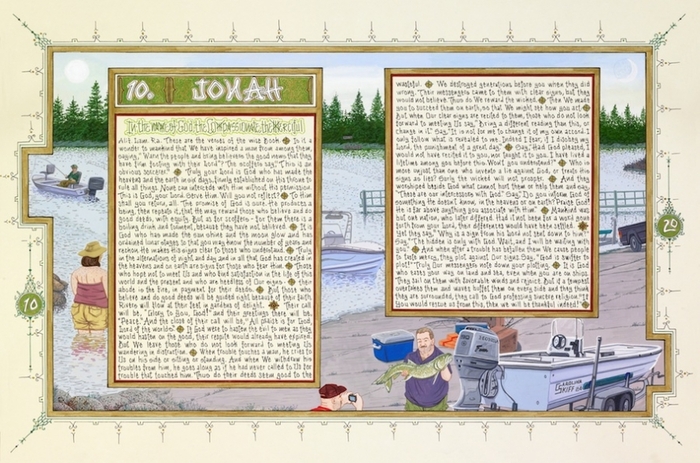
I'm a bit late to the party, but a sample of the American Qu'ran created by Sandow Birk. It's a complete manuscript of the translated text with illustrations of contemporary American life.
(source)
A
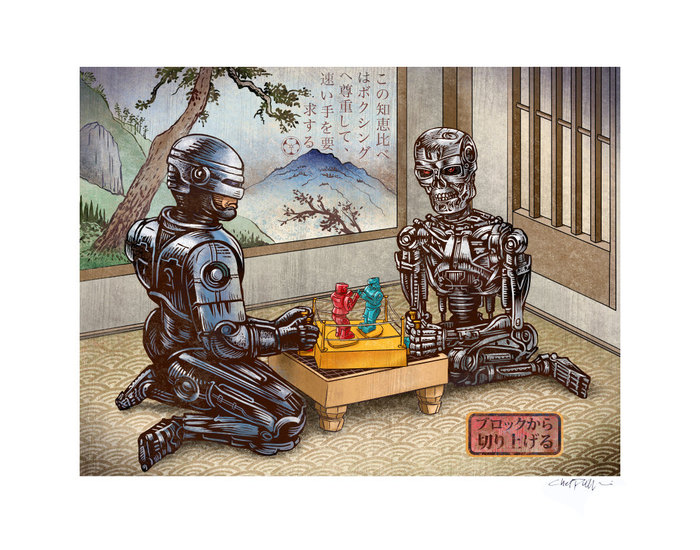
One of the 26 illustrations from Chet Phillips' Childhood.
A
I've taught this class, I'm sure of it
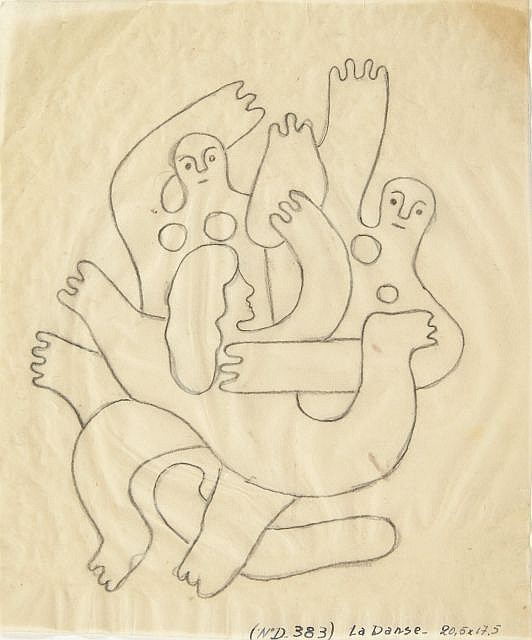
Fernand Léger (1881 - 1955) La Danse
Leadpoint on tracing paper.
A
Although Albrecht Durer and other northern Renaissance artists are the most famous with respect to the genre, the Dance of Death persisted in German art until at least the cusp of the 20th Century. This is a sample from a collection of prints on the theme by Joseph Sattler (1867-1931).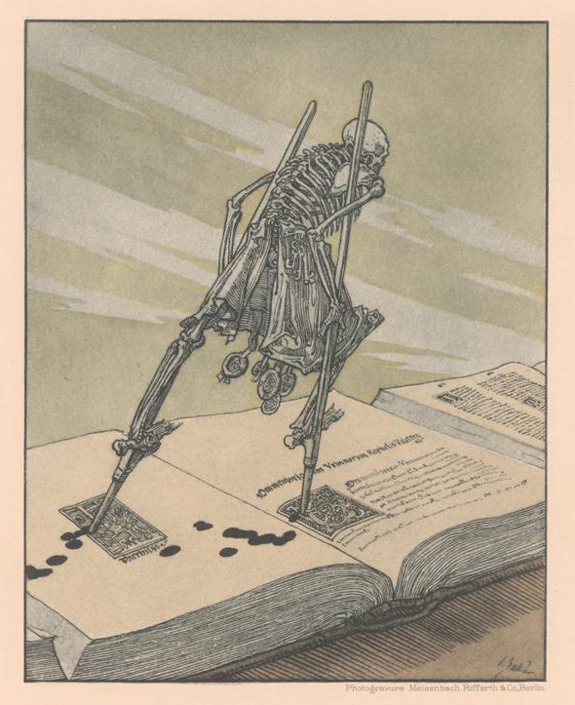
(source)
A
Apparently Nike needed a bit more than wings
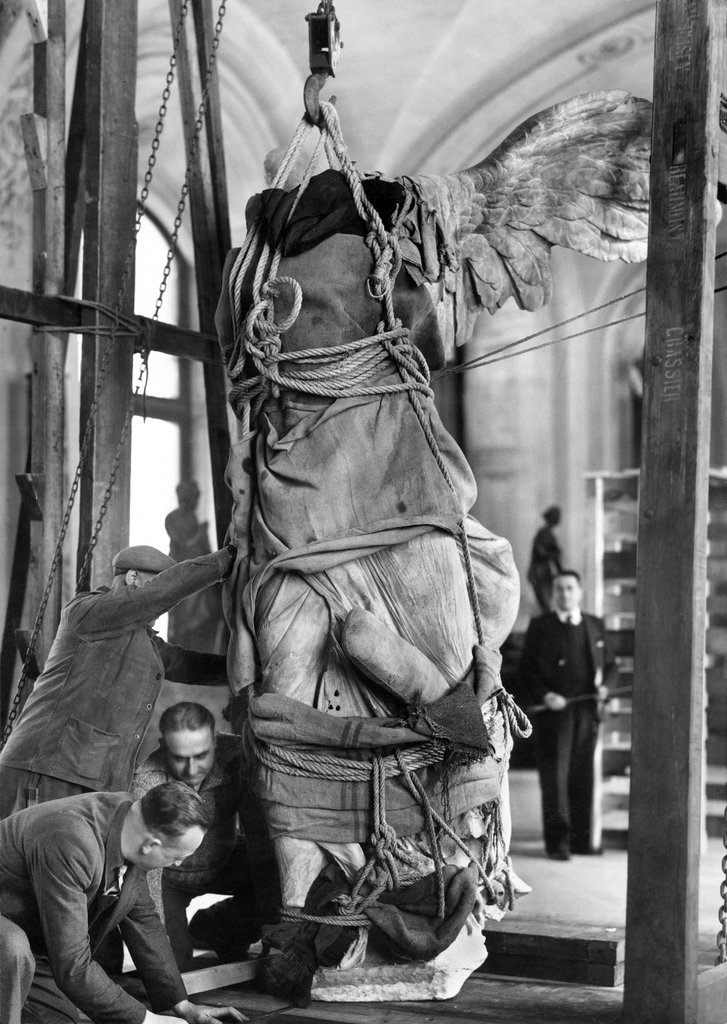
From the New York Times Lively Morgue blog:
Nov. 12, 1939: This photo, published shortly after the start of the Second World War, ran with this caption: "The Winged Victory of Samothrace, another great achievement of the ancient Greek sculptors, packed for removal in accordance with plans for its protection formulated far in advance of the war." A 2009 exhibition at the Louvre showed photos documenting how art was relocated for safety during wartime.
(source)
A
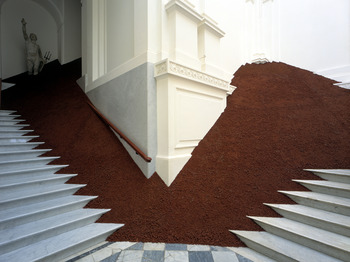
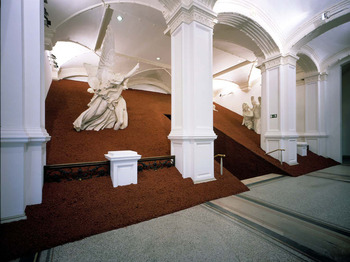
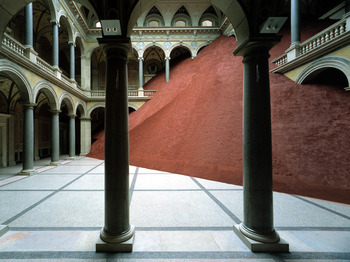
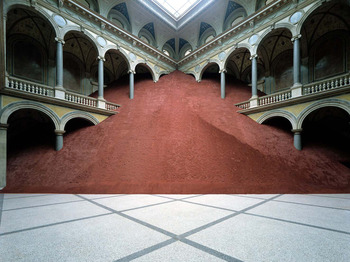
In 1991 Magdalena Jeelovà took over the Viennese Museum of Applied Art, a ornate neo-Renaissance building in the style of a Florentine Palazzo, for her "Domestication of a Pyramid" Utilizing one of the most antique of architectural forms to overwhelm both the more modern architecture and neo-grecian sculptures that line the colonnade.
 |  |
 |  |
From the exhibition catalogue:
Upon entering the building, the visitor finds himself/herself, surprisingly, in a darkened, curved space: soon he/she discovers that he/she is standing under large, slanted scaffolding. He/she instinctively walks to the right, where there is a way out. When he/she returns to the daylight, he/she finds himself/herself in the Museum hall, standing next to a thirteen-meter high tilted wall covered in red silica sand. The wall slices the inner space of the Museum diagonally across two floors, slashing razor-like through pillars and balustrades up to the ceiling. The wall, tilted at a 45° angle and with a base thirty-five meters long, is a fragment of one side of a pyramid which could continue in the exterior of the Museum building.
(source)
A